
Fog Runaway is a game I made with Wesley Meyer, Ye Sun Kim, Joseph Chung, and Oliver Steenman in early 2018. Using construct 2 we created an atmospheric game about an office worker trying to escape from a mysterious fog.
My main jobs were the following:
- Program the game using Construct 2’s event system.
- Design all the level layouts
- Work with others to conceive an original game idea.
- Write up asset lists for the project.
- Direct the game’s narrative design.
One of my favorite things about the game is that I got to design and direct a playable opening segment! As someone who loves games that can tell a good story I was very happy to be able to bring my idea for the opening cutscene to life almost exactly as I imagined it. While I was able to reuse a lot of assets from the main game in order to make it I did have to ask Wesley to create a custom soundtrack to go along with it. The final result made me very happy, and you can see it below!
Production for this game was very fun and memorable, especially since this was the very first game I worked on where I had a dedicated artist on the team! In the beginning there was a few hiccups in the production since I didn’t fully understand how long it actually takes an artist to draw stuff. While designing the game I originally envisioned a title screen that depicts an office worker wasting away inside his cubicle. This title screen would’ve been very reminiscent of the opening scene from Stardew Valley, but with a lot of animated pieces like a ceiling fan and smoke from a cigar.
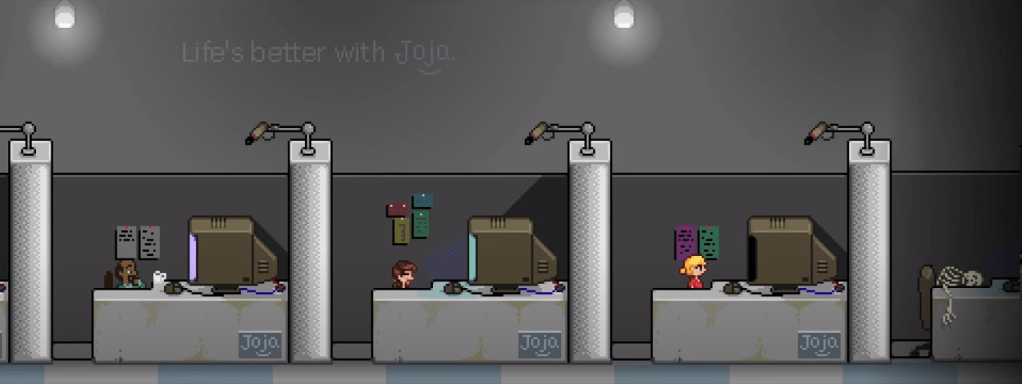
The title screen I actually got was a lot more bare(as seen below), but it did a REALLY good job of showing me that I had been asking for too much from the team artist. After that point I started toning down the scope of my demands by a lot so that they were realistically achievable. I used tileable images for the ground, and I designed the game in such a way so that the artist only had to draw a walk cycle facing in four directions rather than in eight which didn’t impact the game’s aesthetics too much.
One of my biggest tasks was scripting the enemy’s AI which wasn’t too much of a problem to deal with as Construct 2 had built in functionality for AI pathing. As for the level design however we were originally going to have Oliver work on that but a last second emergency forced him to step down from that task. I volunteered to do it instead and so I had to build all of the levels at nearly the last minute of the project’s lifespan.
The game only had three levels so my design philosphy was pretty basic: make the first level really easy, the second level less easy, and the third level kind of difficult. Each level tasks the player with finding four flowers in order to open the gateway to the next level. They must navigate around an office environment without coming into contact with enemies. Over time an eerie fog will start to creep in on the player, that they must collect light orbs to keep it at bay.
I made the first level fairly small so that the player wouldn’t get lost very easily. I also scattered a lot of lights around to reduce the chances of the them dying to the fog while they were still learning how the game worked. While there were a few enemies in it they were very spread out so the player wouldn’t have too hard of a time avoiding them if they were careful.
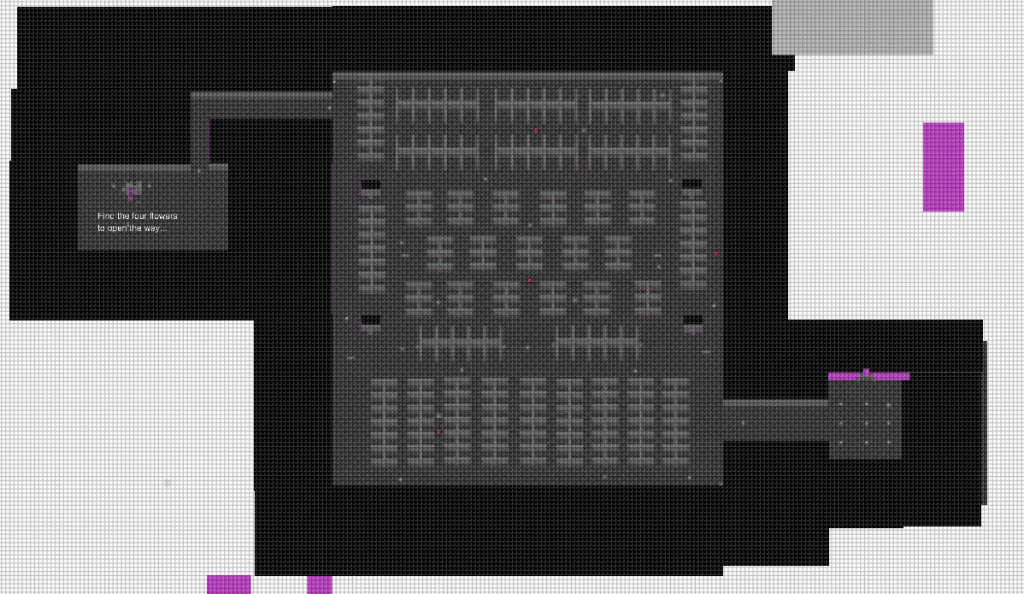
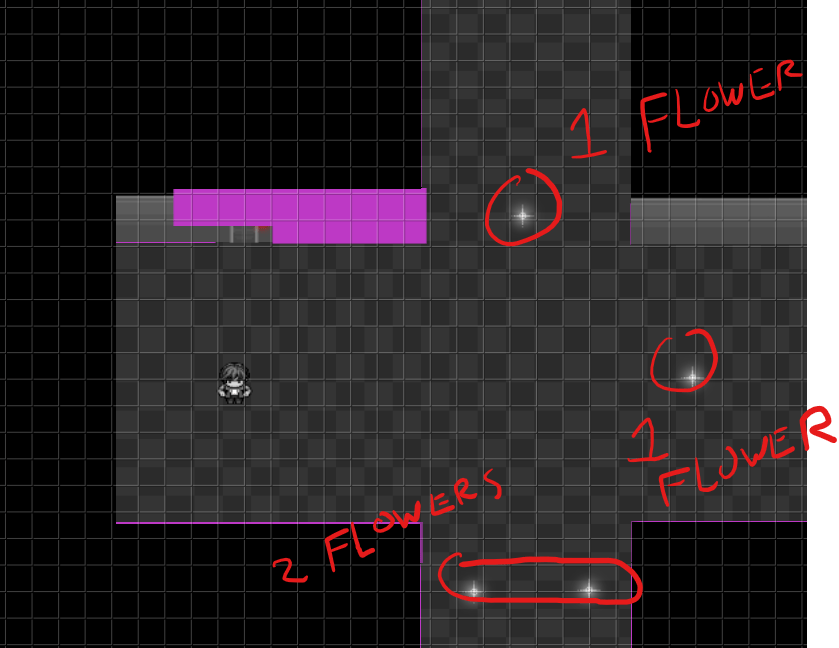
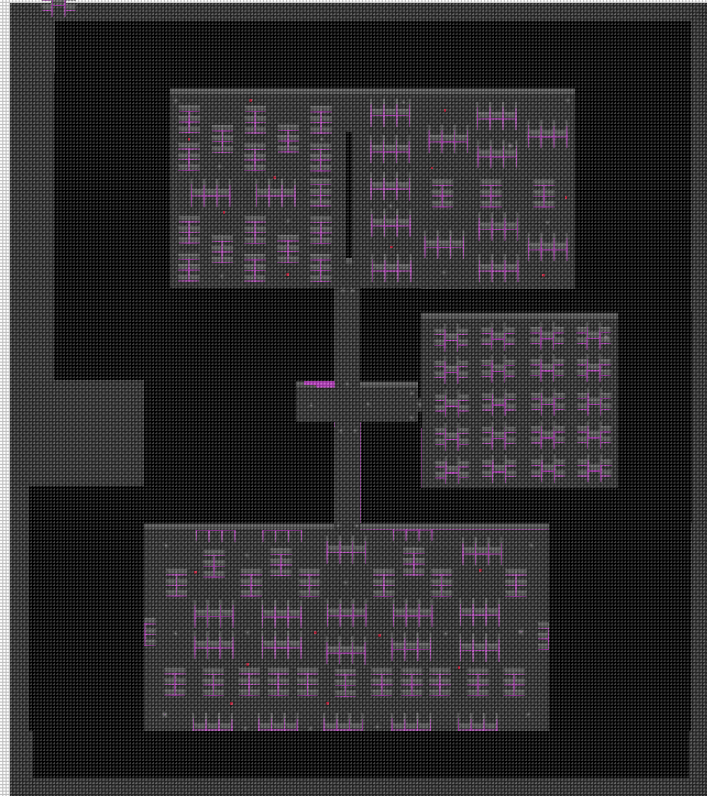
The second level was a bit more interesting. It had three different paths at the start the player could take in order to explore the map. Each one led to a different section of the map where new challenges could be found. One detail which I am particularly fond of is that the start of each path has light orbs positioned in front of them that correspond to the number of flowers that can found in each section. Section one only has one flower for the player to find so the path leading to it only has one light in it. Section three on the other hand has two flowers in it so there are two light orbs at the start of the path leading to it. While the player is unlikely to instantly understand what this means I think it helps to subliminally inform the player of how much each section needs to be searched.
Section’s one and three were pretty straightforward. Each one is like a self enclosed labyrinth with enemies to avoid and flowers to collect. All I had to do was iterate on the layouts a bit through playtesting until I felt comfortable with the result. Section two on the other hand was kind of fun because I deliberately put ZERO lights in it for the player to collect other than the flowers. This was to make the player feel scared when the fog starts creeping in and they realize that there are basically no collectables for them to pickup and survive with. From here they must either turn back or press on to find the flower hidden here before they die.
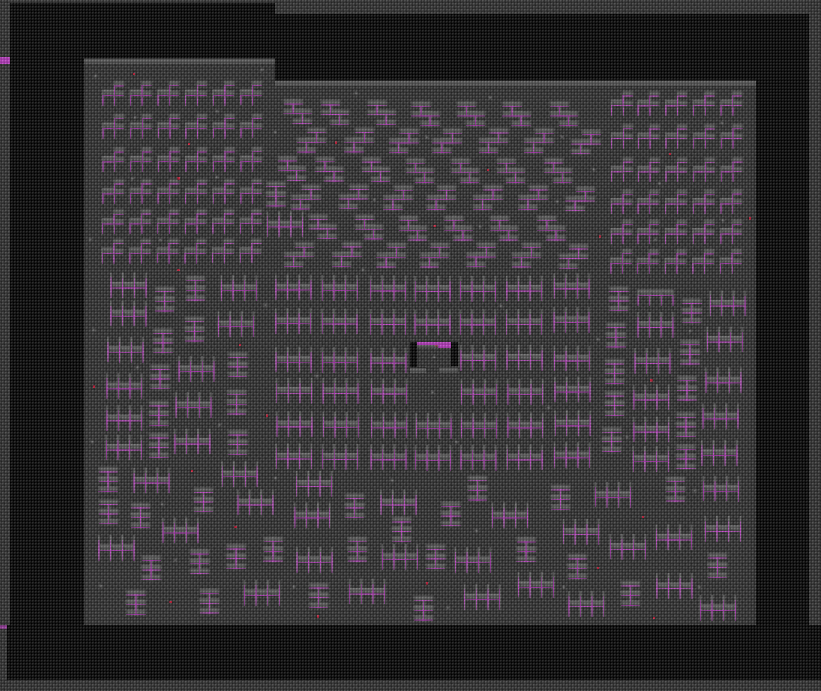
The final level of the game, level 3, was made to be difficult by having a massive size. It was made even harder by the fact that the player spawns in the middle of the map with any direction to explore. It takes a long time to beat and the collectable lights are scarce which can really tax the player’s ability to search quickly and efficiently. Even as the person who made this level I still find myself getting lost in it sometimes, but the payoff is worth it as the final door will take the player out of the building and to freedom.
Overall, I was very happy with the final result. I did a good job of building the level layouts, but I probably should have playtested the game a bit more before the final submission. I had some friends test out the game and they had a very hard time obtaining the flowers without dying over and over again due to the fog which was originally meant to always be creeping in. In response to this I changed the fog so that the it only shows up during the final few seconds of the time it takes to roll in completely and kill the player. This way the player’s vision wouldn’t be obstructed until they were already likely to die anyways. My other big learning point came simply from learning what is and is not a reasonable thing to expect from an artist and ever since this project I have gotten very good at coming up with efficient design solutions that reduce my teammates’ workloads as much as possible without compromising the quality of the final product.
I am proud of the work I did and the lessons I learned. I’m looking forward to telling more stories in my future games!
 Darren Walsh